

Events
-
-
Performing Pamiri Identity in Central Asia
10383 Bunche Hall 11282 Portola Plaza, Los Angeles , CA, United StatesThe Pamir mountain range straddling the border between China, Tajikistan and Afghanistan lent its name to a specific group of Eastern Iranian languages, the Pamir languages. Speakers of these languages belong in majority to the Ismaili branch of Shia Islam. They are known as Pamiris. As speakers of unwritten, minority languages and as members of...
-
-
[POSTPONED] Ups and Downs of Women’s Quest for Equal Rights under the Islamic Republic of Iran
121 Dodd Hall 390 Portola Plaza, Los Angeles, CA, United StatesA lecture by Mehrangiz Kar Mehrangiz Kar is a writer, attorney, and activist specializing in women's rights and family law. She is currently a visiting scholar at the Gender and Women's Studies Department of California State University, Northridge (CSUN). Prior to this fellowship, she worked as a senior expert at Family Health International (FHI), a Washington DC-based international development...
-
2015: Discourse on the Armenian Condition
10383 Bunche Hall 11282 Portola Plaza, Los Angeles , CA, United StatesA lecture by Seta B. Dadoyan (Independent scholar) Thursday, November 10, 2016 4:00 PM 10383 Bunche Hall UCLA The talk, based on her recently published bilingual volume The Armenian Condition in Hindsight and Foresight: A Discourse, (Ontario: 2015) will focus on the basic arguments in support of the “peculiarities”, which define the Armenian condition and through...
-
The Arabic Freud: Psychoanalysis and Islam in Modern Egypt
NELC Seminar Room (Humanities 365) 365 Humanities, Los Angeles, CA, United StatesPresented by Omnia El Shakry, Associate Professor of History at UC Davis What might it mean to think through psychoanalysis and Islam together, not as a problem, but as a creative encounter of ethical engagement? Traversing literatures minor and major, Omnia El Shakry shows how postwar thinkers in Egypt translated and blended psychoanalytic theories with...
-
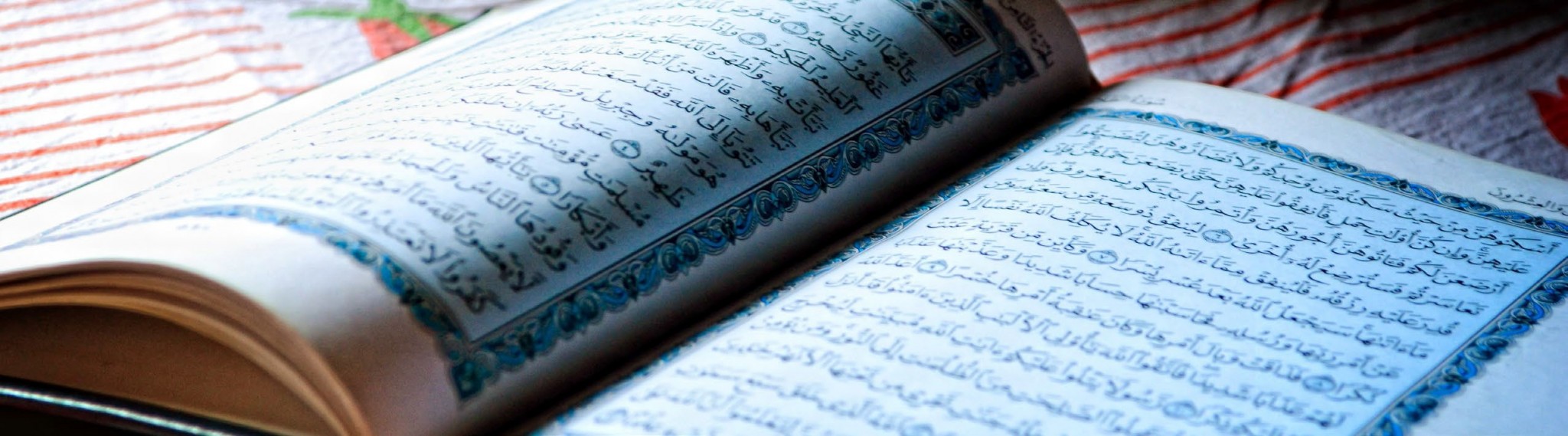
New Methods in the Study of the Qur’an
11348 Charles E. Young Research LibraryThe date and provenance of the Qur’an, as with all the literary sources for early Islamic history, have been the subject of scholarly disagreement for decades. So have the questions of whether the Qur’an had one author or multiple authors, and whether the suras are random mishmashes of verses from different periods or somewhat coherent...
-
-
New Light on the Egyptian Origin of the Hebrew Alphabet
Young Research Library (YRL) Room 11360 280 Charles E Young Dr N , Los Angeles, CA, United StatesThe publication of a new inscription from Theban Tomb 99 sheds new light on the early history of the Hebrew Alphabet. This ostracon is a bilingual “abecedary” written in Egyptian Hieroglyphic and Semitic. It gives further evidence for an Egyptian connection to the origins of the early Hebrew alphabet. Sponsored by the UCLA Near Eastern...
-
Two Book Talks by Ghobad Fakhimi and Fredun Hojabri
121 Dodd Hall 390 Portola Plaza, Los Angeles, CA, United StatesTwo Book Talks in Persian Ghobad Fakhimi received his BS as a petroleum engineer in 1956. He later attended the Abadan Institute of Technology and Columbia University, where he studied advanced chemical engineering. He then worked for NIOC, first as a plant operator, retiring as a member of the Board of Directors. Upon retirement, Fakhimi founded Independent International Consultants (IIC) through...
-
-
Sea Peoples and Neo-Hittites in the ‘Land of Palistin’: Recent Discoveries at Tayinat on the Orontes
Faculty CenterRecent archaeological discoveries have begun to challenge the prevailing view of the Early Iron Age (ca. 1200-900 BCE) as an era of cultural devolution and ethnic strife, or a ‘Dark Age’, in the eastern Mediterranean, as depicted in the Homeric epics and the Hebrew Bible. This illustrated talk will highlight the exciting discoveries of the...
-

Persepolis After Alexander
121 Dodd Hall 390 Portola Plaza, Los Angeles, CA, United StatesA lecture in Persian Ali Mousavi was born and raised in Iran. He studied in Lyon, France, and took his B.A. in Art History, and his M.A. in Archaeology from the University of Lyon, France. He obtained his Ph.D. in archaeology of the ancient Near East from the University of California, Berkeley. He excavated in France,...
-

Divine Priestesses: The Ptolemaic Queens in the Egyptian and Hellenistic Cults
NELC Seminar Room (Humanities 365) 365 Humanities, Los Angeles, CA, United StatesThe Ptolemaic kings and queens were not only venerated as synnaoi theoi (‘temple-sharing gods’) in the Egyptian temples and received various cults of their own (including the Hellenistic and Egyptian ruler cults), but they also served as priests and priestesses themselves. In the ancient Egyptian understanding, the king was per definitionem the high priest. This...